
There is a specific feeling you get when you read marketing copy that was written for you.
It doesn’t feel like a broadcast, it feels like someone was already inside the conversation you were having with yourself about the problem you’ve been sitting with, the thing you’ve been half-looking for and they just said it better than you could.
And then there is the other kind, the kind that lists features at you. The kind that opens with ‘We’re excited to share…’ or ‘Introducing our new…’ and then proceeds to describe a product as though the reader’s job is to be impressed. That copy isn’t talking to anyone, it’s talking at everyone.
And talking at everyone is how you reach no one.
The distance between those two experiences is marketing copy and understanding what creates that feel, across every channel and format a marketer works in, is what this post is actually about.
What Is Marketing Copy?
Marketing copy is the written text used across marketing channels including email, paid ads, landing pages, social media, and more to move a defined audience toward a specific action.
It is purposeful, targeted, and built to convert rather than simply inform. Unlike content writing, which educates and builds trust over time, marketing copy is designed to activate, to create a moment where the reader decides to do something they might not have done otherwise.
What distinguishes marketing copy from general copywriting is its channel-awareness.
The same message needs to work differently in an email than in a paid ad than on a landing page because the reader is in a different state of mind, at a different stage of the decision, in each of those places.
Good marketing copy accounts for that. It doesn’t just say the right thing, it says the right thing in the right place, at the right moment, to the right person.
The One Principle That Works Across Every Channel
Marketing copy works when it feels like one person talking to one person.
Not a brand talking to a segment or a company making an announcement to its list but one person, who understands exactly what another person is going through, saying the thing that person needed to hear. That is the target. In every format, at every word count, across every platform.
Here is what that looks like in contrast. Broad marketing copy for a project management tool might read: ‘Streamline your team’s workflows and improve productivity across your organization.’ It is accurate, inoffensive and it could apply to any team at any company of any size. And because it applies to everyone, it resonates with no one in particular.
Targeted marketing copy for the same tool, written for a specific person might read: ‘Stop losing track of who’s doing what.
One place for tasks, deadlines, and the conversations that actually move work forward.’ Same product but now there is a person in the room. Someone recognizes themselves in the words. That recognition is what converts.
The strategic implication of this principle is simple, before you write a word of marketing copy, you have to know exactly who you’re talking to.
Not their demographic profile but their internal monologue. You have to understand what are they telling themselves about this problem right now? What have they already tried? What are they afraid of getting wrong again? Write from that place, and the channel almost doesn’t matter.
12 Strategies for Marketing Copy That Converts
1. Lead with one thing
The most common structural mistake in marketing copy is trying to communicate too much at once. The reader’s attention is not a resource that can be divided and preserved, it is a resource that disappears the moment it is split. Decide on the single most important thing your reader needs to understand, and lead with only that. Everything else earns its place beneath it, or it doesn’t belong.
2. Cut until it hurts, then cut again
Good marketing copy is almost always shorter than the first draft. Not because brevity is a virtue in itself, but because the words that survive the cutting are the ones that were actually doing work. The test for any line of marketing copy is, if you removed it, would the reader lose anything? If the answer is no, remove it. Do this pass twice. The second pass usually finds things the first one missed.
3. Make the value immediate
Readers of marketing copy are not patient. They are scanning, half-distracted, with a dozen other things competing for their attention.
If the value of what you are offering is not clear within the first two or three sentences, you have already lost most of them. The value does not have to be fully explained immediately. But it has to be felt. The reader has to sense, within seconds, that there is something here worth their time.
4. Mirror the reader’s language
One of the most effective things a piece of marketing copy can do is use the exact words the reader already uses to describe their own problem.
Not paraphrased or not cleaned up or not translated into brand-appropriate language but the actual words. When someone reads copy that sounds like their own internal monologue, they do not experience it as marketing. They experience it as recognition and recognition creates trust faster than any claim.
5. Speak to the moment they are in
Marketing copy that works does not just understand who the reader is, it understands where the reader is. A first-time visitor who has never heard of you is in a different moment than a subscriber who has been on your list for six months.
The same message, delivered to both, will land differently and probably poorly for at least one of them. Effective persuasive marketing meets the reader at their current level of awareness: of the problem, of the category, of your specific solution.
Copy written for someone who doesn’t yet know they have a problem should not sound like copy written for someone who is ready to buy.
6. Write for one person, not a segment
Audience segmentation is a useful analytical tool. The moment you sit down to write marketing messages for ‘millennial professionals aged 28-35 with household incomes above $75k,’ the copy becomes demographic rather than human.
Instead, write for one specific person who represents that segment at their most real. Give them a name if it helps. Imagine their Tuesday. What are they worried about?
What did they try last time that didn’t work? Write to that person. The segment will recognize itself in the result.
7. Use specificity over claims
Claims are cheap. Every piece of marketing copy promises that something is excellent, industry-leading, or game-changing.
Readers have processed enough of these claims that they have learned, largely unconsciously, to discount them on sight. Specificity is what cuts through.
Not ‘faster results’ but ‘results in 11 days.’ Not ‘loved by thousands’ but ‘used by 43,000 teams in 90 countries.’
Not ‘significant cost savings’ but ‘customers report saving an average of six hours a week.’ The specific number, the specific timeframe, the specific outcome, these are the details that make a claim feel like evidence.
8. Let proof speak before promises
There is a sequencing instinct in most marketing copy that leads writers to front-load the promise and back-load the proof. The pitch first, the testimonial later.
What I’ve noticed is that reversing this changes how the reader processes everything that follows. When the reader encounters a specific, credible proof point before the main pitch, their skepticism drops. The promise lands in a mind that is already slightly more open.
A single customer quote placed above the fold on a landing page can do more for conversion than three paragraphs of carefully crafted benefit copy placed below it.
9. Acknowledge what they are skeptical about
Every reader of marketing copy arrives with objections already loaded. They have been oversold before. They have bought things that didn’t work. They have signed up for things that turned out to be different from what was advertised.
The instinct in most marketing copy is to ignore these objections and lead with confidence. The more effective approach is to name them. ‘You’ve probably tried tools like this before.
Here’s what’s different.’ The reader who feels their doubt has been seen is far more likely to keep reading.
10. Reduce friction in the CTA
The call to action is the moment where all the work of the copy is either rewarded or lost and it fails, most often, not because it is in the wrong place or using the wrong colour, but because it is asking for more than the reader is ready to give.
‘Buy Now’ after a cold ad is asking a stranger to get married on the first date. The language of the CTA should match the size of the commitment and should make that commitment feel as small and reversible as possible.
‘Start free’ removes financial risk. ‘See how it works’ removes decision risk. ‘Get the guide’ removes commitment risk. Small asks converts while large asks on cold audiences don’t.
11. Match the ask to the stage of awareness
Conversion copywriting that ignores the reader’s stage of awareness will always underperform. A reader who is not yet aware they have a problem cannot be asked to buy a solution.
A reader who knows the problem but not the category cannot be asked to choose between providers. The copy has to meet the reader where they are and move them one step forward, not five steps forward.
For cold audiences, the ask is often just attention; read this, watch this, learn this. For warm audiences, it can be a trial or a consultation. For hot audiences, the purchase. Map the ask to the stage, then write the copy that earns it.
12. Make the next step feel small
This is the principle underneath most good CTAs, and it applies beyond the button.
The job of the final section of any piece of marketing copy is to make the next step feel obvious, easy, and low-risk. Not just the words on the button but the sentences around it.
What happens after they click? How long does it take? Is there a commitment? What can they undo? The reader who knows exactly what they’re walking into is far more likely to walk in.
Ambiguity about the next step is one of the most common and most fixable causes of low conversion rates.
How Marketing Copy Differs Across Channels
Email Marketing Copy
Email is the most intimate marketing channel, it lands in a place the reader has chosen to give you access to, alongside messages from people they actually know.
That proximity is both the opportunity and the obligation.
Email marketing copy that sounds like a broadcast press release is a violation of that intimacy. It needs to sound like a person wrote it, to a person.
Conversational, direct, and aware that the reader is doing something else while they read it.
Ad Copy
Ad copy operates under the harshest constraints in marketing. A Google headline gives you 30 characters. A social ad has roughly two seconds to interrupt a scroll.
There is no room for warm-up, no space for context-setting, no second chance if the hook doesn’t land. Every word is doing structural work. This constraint is actually clarifying,
it forces the writer to find the single most important thing and say only that. The best ad copy is what’s left after everything inessential has been removed.
Landing Page Copy
A landing page is a sequential persuasion structure. Each section has one job which is to earn the scroll to the next section. The headline earns the subheadline.
The subheadline earns the first paragraph. The first paragraph earns the proof. The proof earns the CTA. If any section fails to earn the next, the reader leaves and they leave at exactly the point where the copy stopped holding their attention.
What this means in practice is that landing page copy cannot be written as a block. It has to be written as a series of micro-commitments. Each one small enough to feel easy, each one moving the reader closer to the decision.
Social Media Copy
Social copy has to earn attention inside a feed built to move fast. The pattern is to interrupt by delivering a line that breaks the scroll.
After that, the job shifts to sustaining enough interest to reach the point.
Social media marketing copy tends to be more voice-driven than other formats, because personality is one of the few pattern-interrupt tools available when the image plays its part and the words have to do the rest.
What stays constant across all of these channels is the underlying discipline: one person talking to one person, with a specific next step in mind.
Marketing Copy Examples: What Good Looks Like in Practice
Principles are easier to hold when you can see them working. Here are four examples from recognizable brands with a brief breakdown of what the copy is actually doing.
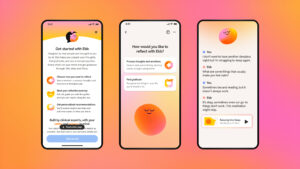
Email subject line, Headspace: ‘You haven’t meditated in a while. We noticed.’ This is re-engagement email copy that leads with observation rather than offer. It doesn’t say ‘Come back — here’s 20% off.’ It says: we know you’ve been away, and we’re not going to pretend otherwise. The effect is disarming. The reader feels seen rather than sold to. Strategy used: acknowledge what they’re thinking before they have to say it.
Ad copy:
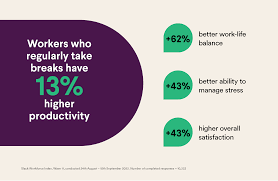
Slack: ‘Make work less work.’ Four words that name the problem and promise the solution simultaneously. No feature list. No explanation of integrations. Just a direct acknowledgment of the pain and an implicit offer to fix it. Strategy used: make the value immediate, in the fewest possible words.
Landing page headline:
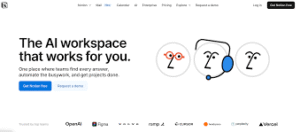
Notion: ‘One workspace. Every team.’ The constraint of a landing page headline demands maximum clarity at minimum length. This one works because it resolves two anxieties at once: the fragmentation of too many tools (one workspace) and the question of whether it applies to your team specifically (every team). Strategy used: lead with one thing, make it immediate, make it universal without being vague.
Social copy:
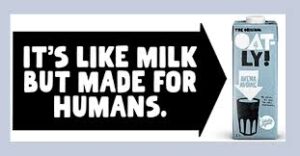
Oatly (Instagram): ‘It’s like milk, but made for humans.’ This line does something most social copy doesn’t, it provokes a mild reaction. It implies something about the alternative without stating it outright. The tone is playful but the strategy is precise: reframe the category so that the competitor becomes the unusual choice. Strategy used: mirror the reader’s latent question back at them in a way that makes them feel clever for getting the joke.
For more marketing copy examples broken down in this way across industries, platforms, and formats, the Ad Copy Examples post is where we go deeper into more than twenty of them.
The Most Common Marketing Copy Mistakes
Writing for everyone. This is the mistake that quietly undermines otherwise competent marketing. The brief says ‘broad audience’ and the copy ends up speaking to no one specifically.
What I’ve noticed when marketing copy stops working is that it has usually lost its person.
The writer stopped talking to someone and started talking at everyone. The fix is not narrowing the audience. It is recovering the specific human inside it.
Leading with features instead of outcomes. Features describe what a product does. Outcomes describe what the reader’s life looks like after it does it.
Most readers do not want the feature, they want the outcome the feature produces.
Copy that leads with technical specifications before the reader has any reason to care about them is sequencing the pitch in the wrong order. The outcome earns the reader’s interest in the feature. The feature does not earn itself.
Burying the CTA.
Some marketing copy builds beautifully to a point and then hesitates.
The call to action appears apologetically at the bottom, in small text, after one too many qualifications. A CTA that feels like an afterthought performs like one.
The ask is not a disruption to the reading experience. It is the point of it. Write it with the same care as the headline.
Using jargon that distances rather than connects. Every industry has its internal language, and there is a version of marketing copy that speaks almost exclusively in it.
‘Leverage synergies.’ ‘End-to-end solutions.’ ‘Best-in-class performance.’ These phrases do not communicate. They signal. And what they signal, to most readers, is that the writer is more comfortable with the language of their industry than with the language of their customer.
The reader who encounters jargon they don’t use does not feel informed, they feel excluded.
Frequently Asked Questions About Marketing Copy
What is marketing copy?
Marketing copy is the text used across marketing channels including email, ads, landing pages, social media, etc, to persuade a specific audience to take a specific action.
It is distinct from content writing in that its goal is not to educate or attract over time, but to convert in the moment.
Every word in marketing copy is there because it earns the reader’s next step, or it shouldn’t be there.
How is marketing copy different from content writing?
Content writing builds trust and attracts an audience over time.
Content writing includes blog posts, guides, and educational material that bring readers in and keep them engaged. Marketing copy activates.
It is written to produce a decision: a click, a sign-up, a purchase. Content is measured by traffic and engagement. Marketing copy is measured by conversion.
Both matter but they are doing different jobs, and the best marketers always know which one they are doing at any given moment.
What makes marketing copy convert?
Conversion copywriting works when it is specific, relevant, and written for one person, not just a segment. It leads with the outcome the reader wants, not the features of the product.
It reduces friction at every step, especially around the call to action. And it meets the reader where they are rather than where the writer wishes they were.
How long should marketing copy be?
As long as it needs to be to make the reader take the next step, and not one word longer.
Ad copy works in seconds and characters. Landing pages can run to thousands of words if each section earns the scroll to the next.
Email copy tends to work better when it is shorter than the writer’s first instinct. The format and the reader’s stage of awareness determine the appropriate length.
The principle is always the same: cut anything that isn’t doing work.
What are the types of marketing copy?
The main types are email marketing copy, ad copy, landing page copy, social media copy, and sales copy.
Each operates under different constraints such as character limits, attention windows, reader states of mind, but all share the same underlying discipline. One person talking to one person. A specific action as the goal. Clarity, relevance, and a reason to act, regardless of the channel.
Final Thought
Marketing copy is a conversation, not an announcement. When it is working, the reader does not feel marketed to, they feel understood.
They feel like someone paid close enough attention to their world that the words came out right. That is the target, in every format, on every platform, at every word count.
The channel changes, the conversation doesn’t.