
You’ve probably scrolled past hundreds of ads today. Most of them you didn’t even register. But every once in a while, one stops you. Maybe you paused. Maybe you read the whole thing. Maybe you clicked. You weren’t sure why, exactly, but something in the words just pulled at you.
That pull is not accidental. It didn’t happen because the image was pretty, or the targeting was clever, or the algorithm got lucky.
It happened because someone sat down and thought very carefully about what to say and how to say it so that a stranger on the other side of a screen would feel something.
That craft has a name. It’s called ad copy. And once you understand what it is and how it works, you’ll never look at an advertisement the same way again.
You’ll start to see the mechanics behind the feeling. You’ll notice what’s working, what’s lazy, and what’s genuinely good.
This post is going to show you exactly that.
What Is Ad Copy?

Ad copy is the written or spoken text in an advertisement. It is the words specifically chosen to make a target audience take a defined action. It appears across platforms including search engines, social media feeds, display banners, billboards, TV spots, radio, email inboxes, and even podcast sponsorships. A good ad copy doesn’t just inform. It converts.
Ad copy is not the same as a blog post, a social media caption, or a product description even though those things also involve words about a brand.
What separates advertising copy is intent. Every sentence, every word choice, every punctuation mark serves one purpose: to get the reader to do something specific. Click. Buy. Sign up. Remember.
Think about Nike’s ‘Just Do It.’ Two words. No adjectives. No explanation. No long list of product features. It doesn’t tell you what Nike sells, it tells you who you could be if you buy it. That is advertising copy basics distilled to its purest form.
An ad copy can be two words or two hundred. It can be a Google search headline or a full-page magazine spread. It can be scripted for video or written for a banner no bigger than a thumb. The format changes. The principle doesn’t: every word earns its place, or it doesn’t belong there.
Related post: How To Write Ad Copy: 7 Tips From Great Ads
Why Ad Copy Matters
Here’s something I find genuinely interesting about the way people think about ads: most of the attention goes to the visual. The image, the video, the design.
And visuals matter, they earn the glance. But the copy is what earns the click. It’s what earns the conversion. It’s what makes someone stop and think, ‘this is for me.’
A business can spend thousands on media placement and get almost nothing back. This is not because the audience was wrong, or because the timing was off, but because the words were weak. The ad showed up in the right place at the right time, and then the copy let it down. The placement doesn’t need to change. The budget doesn’t need to double. The words need to change.
The reverse is also true. A brilliant ad copywriting in a small, scrappy campaign can outperform a massive media spend with generic copy. The words are the mechanism, everything else is the delivery system.
There’s a practical dimension to this too.
Ad copy directly affects your click-through rate, your conversion rate, and ultimately your cost per acquisition.
Every percentage point you gain in CTR by improving your copy is money you’re not spending to get the same result. It compounds. And unlike a lot of marketing decisions, copy is testable.
You can run two versions of the same ad with different headlines; same image, same audience, same budget and within days you’ll know which one resonates. That kind of measurability is rare in marketing, and it’s one of the things that makes ad copywriting worth mastering.
But the impact goes beyond the numbers. Consistent, clear ad copy builds recognition over time. When your audience see your ads, read your words, and feel like they understand what you stand for, you start to occupy space in their minds.
The Core Elements of Ad Copy
Most people look at an ad and see the finished product; the headline, the image, the button. What a copywriter sees is a system where each part is doing a specific job.
Pull any element out and the whole thing weakens. Understanding those elements is what I’d call copywriting fundamentals, the foundation under everything else.
The Headline: Why the First Few Words Decide Everything
The headline is the ad’s first impression. In most cases, it’s also the only impression. If the headline doesn’t stop someone, they’ll never read the rest.
It doesn’t matter how good your offer is or how carefully you crafted the body copy underneath, none of it matters if the headline fails.
What a good headline must do: stop the scroll, signal relevance, and create enough intrigue that reading further feels worth it. That’s three jobs in five words or fewer.
Consider the difference between ‘Accounting Software for Small Businesses’ and ‘Stop Losing Money to Bad Bookkeeping.’ The first tells you what it is. The second tells you what’s at stake. One of those makes you keep reading. The best ad copy headlines don’t describe, they provoke actions.
The Value Proposition: What’s in It for Them
The value proposition is the answer to the most honest question your reader is asking: Not ‘what does this product do?’ but ‘what does this product do for me, specifically, in my actual life?’
That gap between features and value is where most ad copy breaks down.
A mattress company that says ‘memory foam construction with breathable layers’ is describing a product. A mattress company that says ‘wake up without back pain’ is communicating a value.
The reader doesn’t want the foam. They want the morning that feels different. Good advertising copy understands this distinction and speaks directly to the outcome, not the mechanism.
The Call to Action: What You Want Them to Do Next
A call to action is not just a button. It is the single most important instruction in the entire ad, the moment where all the work you’ve done either converts or doesn’t.
The language matters more than people think. ‘Buy Now’ creates pressure. ‘Start Your Free Trial’ removes it. ‘Get Instant Access’ creates urgency without aggression. ‘Learn More’ softens the commitment for audiences who aren’t ready to decide.
The best CTAs are specific, low-friction, and aligned with where the reader actually is in their decision. When someone reads a strong CTA, they don’t feel pushed, they feel guided.
Audience Relevance: Talking to Someone, Not Everyone
This is where most ad copy quietly fails. The writing is technically fine with clear sentences, decent headline, obvious CTA, but it speaks to no one in particular. And copy that speaks to everyone usually resonates with no one.
The difference between broad and relevant copy is felt immediately. Consider an ad for a project management tool that says ‘Manage your team’s work in one place.’ Now consider the same product with copy that says ‘Built for agencies that have tried every tool and still miss deadlines.’ One could apply to anyone. The other feels like it was written specifically for you if you’re in that room. That specificity draws in the right people with force, because they recognize themselves in the words.
Types of Ad Copy

Ad copy doesn’t live in one place or take one form. Part of understanding advertising copy is understanding where it shows up and what it looks like in each context.
Short-form ad copy is what you’ll find in social media ads, display banners, and search results. The character count is limited and the competition for attention is brutal. A Facebook ad headline might be 40 characters. A Google Ads headline gives you 30. In that space, you can’t afford a single vague word.
Long-form ad copy is mostly seen in landing pages, sales letters, email sequences. The goal is the same (conversion) but the path is longer. Here, the copywriter builds a case. They tell a story, address objections, layer proof, and earn trust before asking for action.
Search ad copy (Google Ads) operates by a different logic.
It matches what people are already looking for. The copy doesn’t have to create desire, the desire already exists. The job is to signal relevance and win the click before the next result does.
Social media ad copy for Facebook, Instagram, LinkedIn. This format has to earn attention from people who weren’t looking for anything. It interrupts a scroll so the hook has to be immediate. The tone has to fit the platform. LinkedIn copy feels different from Instagram copy, even if the product is identical.
Video ad copy for YouTube pre-rolls and TikTok ads. These work differently again. The words are often spoken, not read. The hook has to land in the first three seconds, because that’s when viewers can skip.
What changes across all of these formats is the medium, the length, and the rhythm. What doesn’t change is the principle: clarity, relevance, and a reason to act. Whether you’re writing a 30-second script or a 90-character Google headline, those three things are always the job.
What Makes Ad Copy Work: The Psychology Behind It
Most posts about ad copy explain what it is. I want to spend some time on why it works, on what’s actually happening inside a person’s head when a piece of copy lands.
Here’s something I keep noticing; before a person clicks or buys or signs up, they tell themselves a story. A small internal narrative that makes the action feel logical, safe, or desirable.
‘This makes sense for me.’ ‘This is the kind of thing I do.’ ‘I need this.’ Good ad copy doesn’t wait for that story to form on its own, it writes it. It plants the sentence in the reader’s mind before they’ve consciously formed it themselves.
Specificity is one of the most underestimated forces in advertising copy. Vague language signals vague thinking, and vague thinking signals risk. ‘Amazing results’ means nothing. ‘Lost 11 pounds in six weeks without changing what they eat’ means something.
The specific detail is the proof. It makes the claim feel real in a way that generic language simply cannot. When I see a specific number, a specific timeframe, a specific name, I believe it more. Most people do.
Emotion opens the door, logic closes the sale.
What I mean by that is; people make decisions based on how something makes them feel, and they justify those decisions with logic afterward.
An ad copy that leads with features and specifications is trying to close the sale before the door is open. The copy that works speaks to something real which can include a desire, a fear, an aspiration, a sense of belonging, and then gives the reader the rational permission to act on it. Both parts matter.
But the feeling comes first.
There’s one more pattern I keep seeing that doesn’t get talked about enough; familiarity.
Copy that mirrors the exact language your audience uses to describe their own problem. I.e; the words they’d use if you asked them to explain their frustration out loud. It always doesn’t feel like an ad.
It feels like recognition. Like someone finally said the thing they’d been thinking. ‘That’s exactly it.’ That moment of recognition is worth more than any clever tagline.
Quick Examples of Ad Copy in the Wild
Everything above is easier to understand when you can see it working. Here are a few real examples from well-known brands. Not to turn them into case studies, but to look at them the way a copywriter would. To notice what they’re actually doing.
-
Nike: ‘Just Do It.’:
Three words, including the full stop. What does it do? It doesn’t describe a shoe or a performance stat. It gives the reader a kind of permission; to start, to try, to move despite doubt. The universality is the point. It applies to a marathon runner and someone taking their first gym class equally. The specific technique at work here is that it speaks to identity, not product. You’re not buying a shoe. You’re becoming the kind of person who just does it.

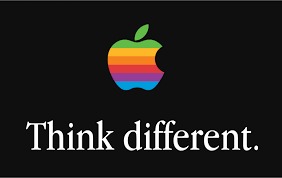
2. Apple: ‘Think Different.’:
Two words and a grammatically provocative choice (different, not differently, and Apple knew exactly what they were doing). This is identity-based positioning at its most distilled. It doesn’t say ‘our computers are better.’ It says ‘the people who use our computers are a different kind of person.’ It creates belonging to a tribe.
3. Dollar Shave Club:
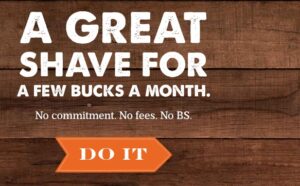
‘A great shave for a few bucks a month. No commitment.’: What’s remarkable here is the lack of polish. It reads like something a person actually said, not something a committee approved. It names the price range, removes the commitment objection, and signals value, all in one breath. The technique; conversational tone that makes the brand feel like a person, not a corporation. When a brand sounds like a real human, the skepticism drops.
4. Slack: ‘Make work less work.’:
Four words. Problem and solution in the same phrase. No explanation of features. No list of integrations. Just a direct acknowledgment of the pain (‘work is too much work’) and an implicit promise to fix it. The technique; problem-first framing that makes the reader feel understood before they’ve even clicked.
Ad Copy vs. Content Writing: What’s the Difference?
This is a question that trips up a lot of beginners, and it’s worth clearing up cleanly. Ad copy and content writing both involve words about brands and products.
But they are doing very different things, and confusing them leads to copy that neither educates nor converts.
Content writing educates and attracts. A blog post about running shoes teaches you how to choose the right pair which can include heel drop, arch support, terrain type.
A social media article about productivity explains time-blocking techniques. The goal is to build trust over time, establish authority, and bring people into your world. It’s measured by traffic, shares, and time on page.
Ad copywriting converts and activates.
An ad for running shoes makes you feel like you already need them, right now, before you talk yourself out of it. The goal is a specific action, in a short time window. It’s measured by clicks, sign-ups, and sales.
A blog post that reads like an ad feels pushy and untrustworthy. An ad that reads like a blog post is too slow and indirect, by the time it gets to the point, the reader has moved on. The best marketers know how to do both. But more importantly, they know which one they’re writing at any given moment. That awareness is what separates competent from great.
And Finally…
Here’s the thing about ad copy that I think gets missed in most explanations of it: the words are never really about the product. They’re about the person reading them. What they want. What they’re afraid of. What version of themselves they’re trying to become.
The best ad copy doesn’t feel like an ad at all. It feels like someone understood you and handed you the sentence that made the next step obvious. And the reason it’s worth learning is not just that it drives clicks or reduces cost per acquisition (though it does both). It’s that when it works, it’s a genuine act of communication. Of one person saying the right thing to another person at exactly the right moment.