Description
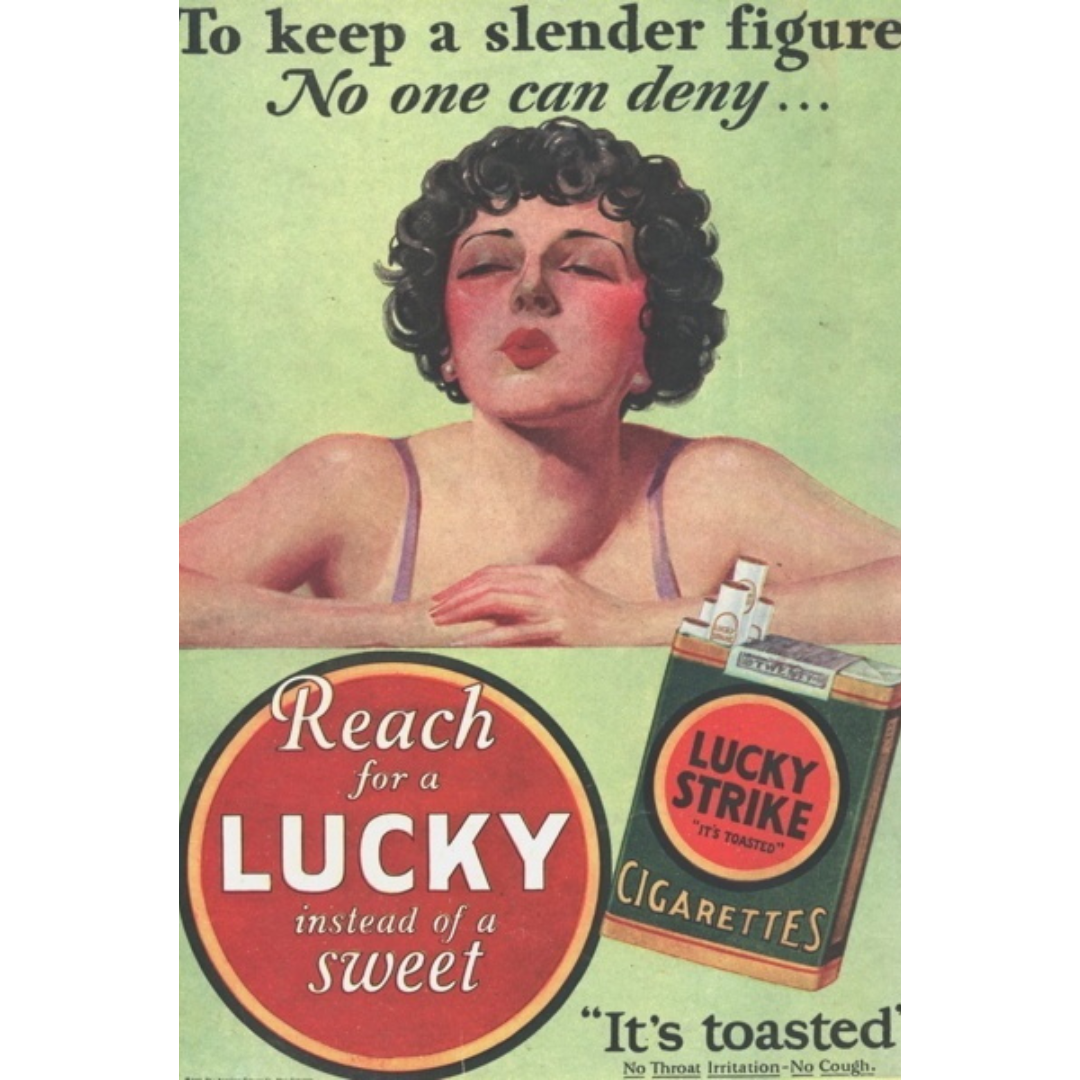
This ad doesn’t sell cigarettes first. It sells fear, fear of weight gain, fear of indulgence, fear of not fitting a narrow idea of beauty. The woman isn’t shown enjoying the product. She’s shown as proof of a promise: smoke this, and you won’t need to eat. The headline frames thinness as something “no one can deny,” turning a social pressure into a supposed fact.
How It Works
The manipulation is subtle but sharp.
Instead of arguing that cigarettes are good, the ad creates a false choice: pleasure or control. Sweet or slim. Desire or discipline. By positioning cigarettes as the “responsible” option, it disguises harm as self-control. The calm pose, soft colors, and elegant styling soften the message, making it feel aspirational rather than aggressive. But underneath, the strategy is clear, replace food with smoking, and call it willpower.
How It Can Be Reused
This ad survives today as a textbook example of exploitative marketing. It shows how brands once used body anxiety, especially toward women, to drive behavior, regardless of health consequences. Modern advertising rules exist because of campaigns like this. And modern audiences are right to reject them.
This isn’t a clever ad.
It’s a reminder of why ethics matter in persuasion.