Description
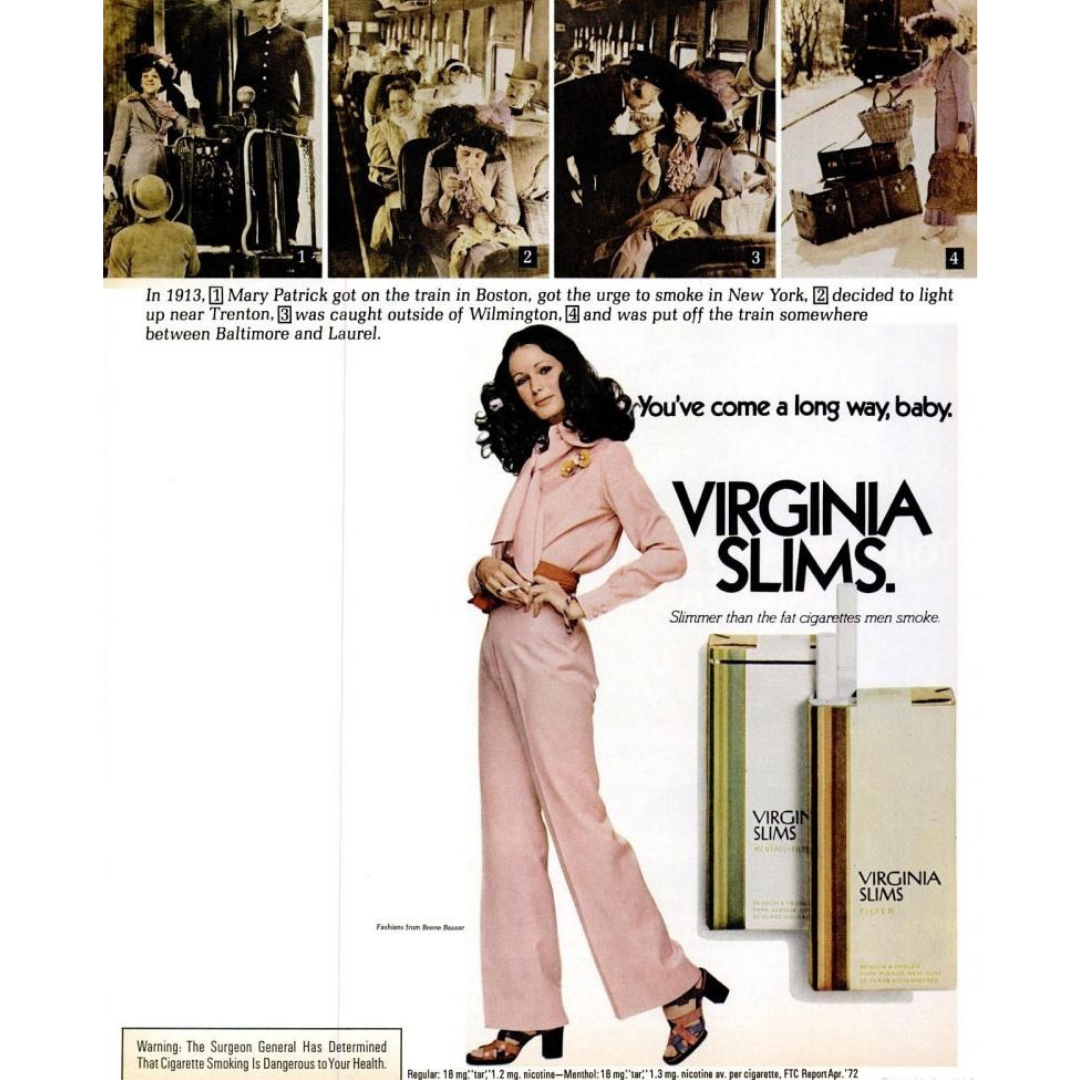
This Virginia Slims ad taps straight into the brand’s signature playbook: take a slice of “women’s progress,” wrap it in glamor, and anchor it to a cigarette. The top of the ad tells a dramatized story from 1913, where a woman gets kicked off a train simply for wanting to smoke. The punchline? The modern woman, tall, confident, dressed in a flawless pastel pantsuit, can now smoke freely because, as the tagline declares, “You’ve come a long way, baby.” It’s part retro reenactment, part feminist cosplay, all engineered to make the cigarette feel like a badge of liberation.
How It Works:
The ad’s whole trick lies in the contrast. Those sepia-toned stills of “oppression” set up the idea that women once had no freedom, not even the freedom to light up. Then the modern model enters the frame like a victory lap. By the time you get to the sleek cigarette pack, the brand has fused empowerment with the product. It’s not really selling nicotine; it’s selling the feeling of stepping into the future with your head held high. Smoking becomes framed not as a habit but as a symbol of independence, sophistication, and progress.
How It’s Reused:
This approach, taking a real struggle, simplifying it, and tying it to a product, is a classic advertising move that still shows up today. Brands reuse this framework whenever they want to align themselves with empowerment. Instead of selling what the product does, they sell what it represents. Whether it’s beauty companies highlighting inclusivity, fitness brands spotlighting resilience, or tech companies championing innovation, the blueprint is the same: borrow a cultural narrative, position the consumer at the center of it, and let them feel like buying the product is a small act of revolution.