In copy writing, the major challenges copy writers face is writing a persuasive content that gets the audience to take action. With the internet crowded with so many ads, your copy must do more than telling a story, it needs to sell.
To get an audience to become a customer by just a click, your copy needs to be a perfect blend of message, tone, and timing. For this reason we have put together 5 legendary ads yielded great results and what copy writers can learn from them.
These legendary ads stood out with bold headlines, emotional metaphors, and also with strong value propositions. Ready to get into this? Let’s go!
-
Dockers print, “A Guide to Casual Businesswear,”
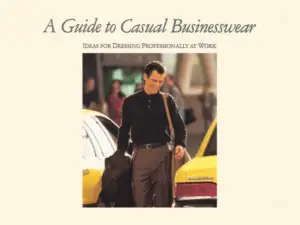
This is a 1990s Dockers print ad titled “A Guide to Casual Businesswear,” feels like a time capsule from an era when companies suddenly realized employees were humans, not mannequins. It’s pitching the sweet spot between being office-ready and not looking like you’re headed to a wedding.
The man in the photo is clearly living his best “work but make it breathable” life, trousers sharp enough for a meeting, top casual enough for a coffee run, and a smile that says he finally escaped the tyranny of stiff suits.
The ad leans on relatability. Everyone wants to look put-together without feeling trapped in layers of fabric that fight back. By visually showing a confident, comfortable guy navigating his day, it sells the feeling more than the clothes.
It reassures you that professionalism doesn’t always mean shoulder pads, ties, and sweat-inducing dress shirts. Sometimes it’s just clean, simple, intentional dressing that still lets you breathe.
What Copywriters Should Learn
- You can win by naming and defining a category before competitors do.
- Teaching and guiding builds credibility faster than selling.
- A simple, authoritative headline can instantly position a brand as the expert.
2. Nike, “Just Do It” (1988 onward)
A long-running global slogan and campaign created by Wieden+Kennedy in 1988. It paired a three-word imperative, “Just Do It”. Nike didn’t need athletes doing backflips or slow-motion sweat drops to get the world hyped. All they needed was a black background, white text, and a line so clean it could slice through hesitation, “Just Do It.”
It’s the kind of message that stares you down. You look at it, and suddenly every excuse you’ve ever made feels… small. It doesn’t yell. It doesn’t lecture. It just nudges you with that confident smirk like, “C’mon, you already know what you need to do.”
Why it worked
The magic is in its simplicity. It speaks to everyone — athletes, creatives, students, even people trying to convince themselves to finally start laundry. The phrase taps into that universal spark inside us that wants to be better, move more, try harder, stop overthinking.
Nike paired a universal human feeling with a sharp, unforgettable visual identity. The swoosh isn’t even trying hard, it just chills beneath the words like, “Yep, that’s us.”
What copywriters should learn from it
- A great line is an operating system for all future creative; make it broad but emotionally resonant.
- Simplicity + repeatability = cultural stickiness.
- Tie product benefits to identity / aspiration, not only features.
- Use storytelling and spokespeople to give the slogan meaning over time.
3. McDonald’s “I’m Lovin’ It” (2003)
A 2003 global McDonald’s campaign introducing the slogan “I’m lovin’ it.” The ad doesn’t try to show you a burger, fries, or even a smiling family. It just drops a vibey little phrase next to the golden arches and lets your brain do the rest. It’s simple, warm, and impossible not to hum in your head the second you see it.
McDonald’s wasn’t selling a meal here, they were selling a feeling. That moment when food hits exactly right. The comfort of something familiar. The tiny joy of a quick treat on a busy day. And they distilled all of that into three words.
This campaign works because it’s universal. Everyone has something they’re “lovin’,” and McDonald’s cleverly inserts itself into that emotional space. The simplicity makes it sticky. The rhythm makes it memorable. The logo does the rest. It’s branding that whispers instead of shouts, and ironically, that’s why everyone hears it.
What Copywriters Should Learn
- A short, emotional line travels further than a clever, complex one.
- Sonic branding (jingles, audio mnemonics) massively reinforces recall.
- Consistent global repetition builds long-term brand equity.
- Keep the message positive, universal, and flexible across contexts.
4. California Milk Processor Board, “Got Milk?” (1993 onward)
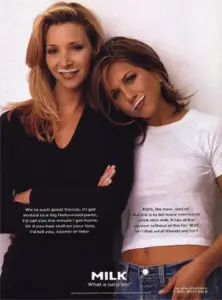
This ad didn’t just feature two actresses, it featured Friends at the height of their fame, casually selling milk like it was the coolest inside joke on TV. With Jennifer Aniston and Lisa Kudrow leaning in like besties who know something you don’t, the milk mustache suddenly stopped feeling like a goofy smear and started feeling like a badge of well nutritional honor.
The copy plays like a friendly tease, the kind of conversation two friends would have when they’re pretending not to care but totally care. And just like that, milk goes from boring fridge staple to something a little more… Hollywood.
It’s nostalgia, celebrity power, and conversational charm all rolled into one. Instead of lecturing people about nutrition, the ad wraps the message in friendship, humor, and a wink.
When people see familiar faces having a casual moment, they don’t feel advertised to, they feel included. The milk mustache becomes the punchline, the bonding moment, the “hey, we all do this” smirk that sells without trying too hard.
What copywriters should learn from it
- A short, provocative question can be more powerful than a long argument.
- Use humor and situational setups to make a brand feel fun and culturally present.
- Create a hook that’s endlessly remixable.
- Repetition across iterations builds deep brand recall.
5. Coca-Cola, “Share a Coke” (Australia launch 2011 → global)
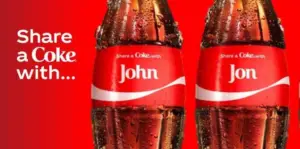
Coca-Cola didn’t just put names on bottles, they turned a drink into a social moment. Suddenly, grabbing a Coke felt personal, like the bottle was looking right at you and saying, “Hey, this one’s yours.”
Whether your name was John, Jon, or something no one ever spells right, seeing it on a label made people smile, take photos, and share it like it was a mini-celebrity moment. It wasn’t just soda anymore. It was connection… in a bottle.
The brilliance lies in its simplicity: personalization. Coke removed their own name, a bold move, and replaced it with yours. It made people feel seen. It made them hunt for their name. It made friends buy bottles for each other just to say, “I thought of you.”
Social media did the rest, turning the campaign into a global treasure hunt filled with selfies and sentimental exchanges. Coke didn’t advertise the drink. They advertised the feeling.
What copywriters should learn from it
- Copy and product can merge, changing the label copy itself was the creative move.
- Make campaigns participatory: give people a role (find it, share it).
- Personalization + social mechanics = organic amplification.
- Simplicity: a small textual tweak (a name) created massive cultural interaction.
Thanks for sticking close…
Legendary ads aren’t accidents, they’re the product of simple ideas executed with emotional clarity and cultural awareness. Whether it’s Nike pushing us to act, McDonald’s selling a feeling, Coke personalizing a moment, or Dockers teaching us something new, the pattern is the same: the best copy doesn’t just communicate; it connects.
As a copywriter, your job isn’t to write fancy lines, it’s to understand people so deeply that your message feels inevitable. These legendary ads prove that when you combine emotion, simplicity, relatability, and timing, your copy stops being “content” and becomes a cultural moment.
And that’s when it sells. For more information on different ads and why they work click here.